Denver’s Premier Commercial Stucco Experts: Engineering Durability Since 2008
Commercial Stucco Denver
Protecting Your Investment from Climate & Compliance Risks. Your exterior cladding is more than decoration—it is a financial firewall. Improper stucco selection triggers water damage, legal liability, and asset devaluation.
The Cost of Failure
Denver’s Environmental Threats
The Mile-High climate destroys inferior stucco systems.
The Regulatory Maze
Hiring unlicensed contractors risks project shutdowns and fines.

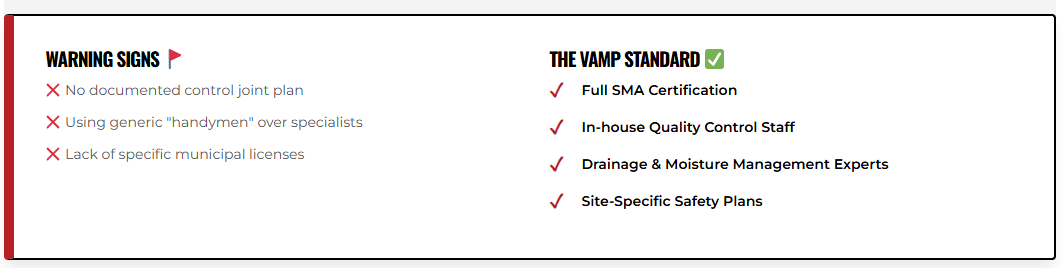
Contractor Due Diligence
Your commercial property’s exterior cladding system directly impacts its financial performance, yet many Denver investors treat stucco selection as merely an aesthetic choice. This oversight can trigger catastrophic water damage, structural decay, and regulatory violations that devastate your investment returns. This comprehensive guide reveals how to protect your asset value through strategic stucco system selection and expert installation in Denver’s demanding climate.
Understanding Stucco as a Critical Building System
Modern commercial stucco installations represent far more than decorative plaster applications. When correctly designed and installed by certified professionals, stucco forms a robust, seamless shell protecting your entire structure. According to construction defect specialists, this engineered system simultaneously provides an attractive exterior finish while shielding the underlying structure from fire, water intrusion, and environmental damage.
The performance of your stucco system depends entirely on installation precision. Research indicates that improper installation, rather than material defects, causes the overwhelming majority of stucco failures. These failures compromise your entire building envelope, triggering cascading problems that threaten your investment.
The Financial Impact of Stucco Failure
Failed stucco systems create severe financial consequences for commercial property owners:
- Direct remediation expenses can reach significant levels when water intrusion compromises underlying structures.
- Legal liabilities emerge from mold exposure and falling debris that endangers tenants.
- Operational inefficiencies increase as compromised building envelopes drive up energy costs.
- Asset devaluation occurs when high operating expenses reduce Net Operating Income.
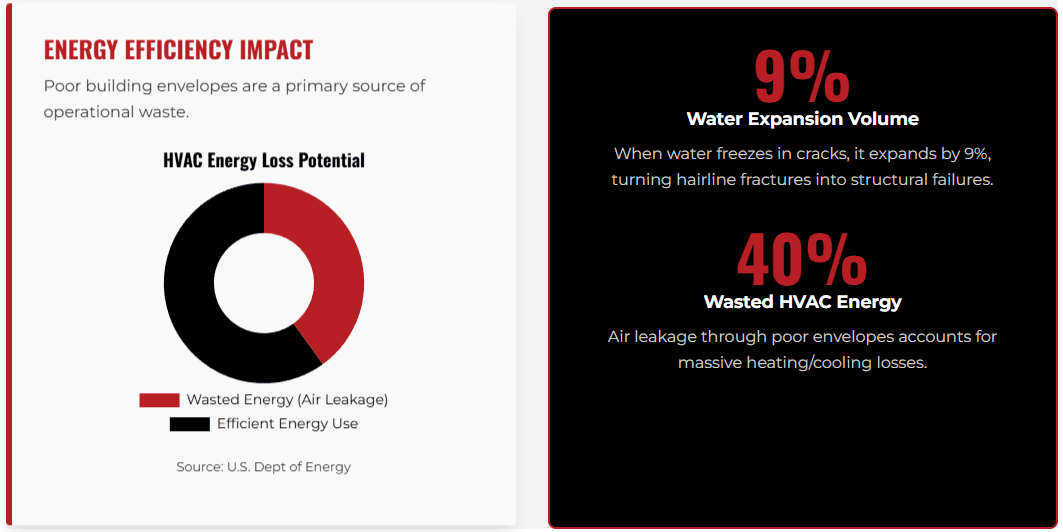
According to the U.S. Department of Energy and National Institute of Standards and Technology, air leakage through poorly sealed building envelopes can account for up to 40% of heating and cooling energy consumption. Proper air barrier systems can reduce infiltration by up to 83% and slash HVAC energy use by up to 40%.
What Is Commercial Stucco?
Commercial stucco is a multi-layered exterior cladding system specifically engineered for non-residential buildings, consisting of portland cement, sand, water, and specialized additives applied over a metal lath or approved substrate to create a durable, weather-resistant building envelope that meets commercial building codes and performance standards.
Denver’s Unique Climate Challenges for Stucco Systems
Denver’s climate subjects building envelopes to extreme stress that can rapidly degrade improperly installed stucco systems. Property owners must understand these specific challenges to protect their investments.
Freeze-Thaw Cycle Damage
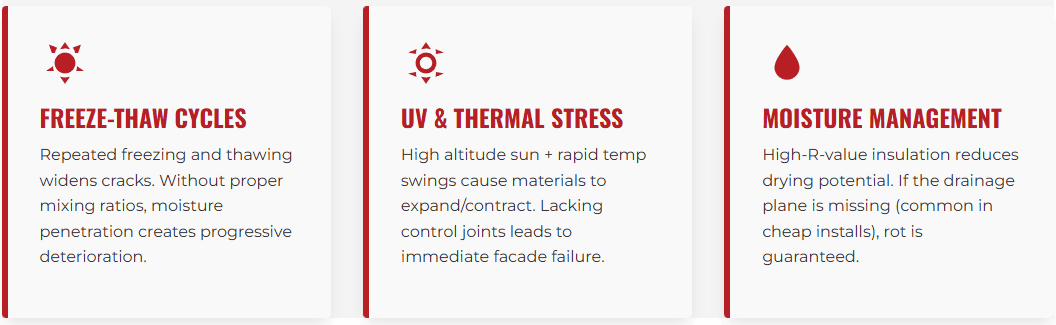
Denver commercial stucco faces relentless freeze-thaw cycles that progressively destroy inadequate installations. When moisture penetrates hairline cracks and freezes, the expanding ice widens these openings, creating larger pathways for water intrusion. This repeated process throughout the winter months can transform minor surface imperfections into major structural failures.
UV Radiation and Temperature Extremes
At mile-high altitude, Denver buildings experience intense solar radiation that prematurely degrades exterior finishes. Daily temperature fluctuations cause building materials to expand and contract significantly. Without properly placed control joints and flexible sealants, stucco systems crack under this thermal stress, particularly at transitions between different materials.
Moisture Management Requirements
Denver receives substantial moisture from heavy snowfall and seasonal storms, placing enormous demands on stucco water management systems. Weather-resistive barriers, flashing details, and weep screeds must function as an integrated system. Modern high-R-value insulation reduces drying potential, keeping structural components saturated longer when moisture penetrates the assembly.
How Does Freeze-Thaw Affect Commercial Stucco?
Freeze-thaw cycles represent one of the most destructive forces acting on Denver commercial stucco systems. Water that infiltrates the stucco surface expands approximately 9% when freezing, generating tremendous internal pressure and causing progressive deterioration through spalling, delamination, and crack propagation.
Common Installation Errors That Lead to System Failure
Improper Material Mixing and Application
Incorrect cement-to-sand ratios prevent proper bonding and curing. According to industry experts, this fundamental error leads to widespread cracking, crumbling, and delamination. Professional contractors understand that precise mixing ratios and controlled curing conditions determine long-term system performance.
Inadequate Control Joint Placement
Control joints manage natural shrinkage and building movement. When installers overlook or improperly place these joints, stress manifests as uncontrolled cracking that becomes primary moisture entry points. Commercial stucco contractors strategically position control joints based on building geometry and substrate characteristics.
Failed Water Management Integration
Modern stucco systems require comprehensive water management strategies. Missing or improperly installed water-resistive barriers trap moisture against structural sheathing, initiating destructive rot cycles. The shift from plywood to OSB has made proper drainage plane creation even more critical, as OSB concentrates moisture at interfaces rather than distributing it evenly.
Flashing and Penetration Details
Points where stucco meets windows, doors, and other penetrations represent the highest failure risk zones. Missing or improperly integrated flashing guarantees water channeling directly into wall cavities. These detail failures often remain hidden until extensive damage has already occurred.
Navigating Denver’s Complex Regulatory Environment
Colorado’s lack of statewide contractor licensing creates a fragmented regulatory landscape. Each municipality maintains unique requirements, making compliance verification critical for project success.
Denver’s Two-Step Licensing Process
The City and County of Denver enforce a two-step contractor licensing process. Companies must employ an individual with a valid Supervisor Certificate before applying for a contractor’s license. Obtaining this certificate requires documented experience verified through notarized employer letters. Class A certificates require seven years of commercial building experience, confirming that licensed contractors have proven leadership.
Municipal Licensing Variations
- Boulder requires ICC examinations and mandates general liability insurance minimums.
- Centennial accepts ICC testing or valid Denver/Aurora licenses.
- Each jurisdiction’s non-reciprocal licenses require contractors to maintain multiple certifications.
Property owners who hire unlicensed contractors risk project shutdowns and regulatory penalties. VAMP Stucco maintains current licensing and full insurance coverage across all Denver metro jurisdictions, eliminating compliance concerns for property owners.
The Value of SMA Certification for Commercial Projects
The Stucco Manufacturers Association (SMA) Certified Contractor designation provides third-party validation of expertise beyond basic licensing requirements.
Rigorous Certification Requirements
- Minimum two-year business history under current ownership.
- Five documented stucco projects completed by company employees.
- Verified references from architects, developers, and suppliers.
- Board approval by industry peers and leaders.
LPS Certified Supervisor Requirement
Employing an LPS-certified supervisor ensures comprehensive training in building science, code compliance, and risk management. Continuing education every five years keeps them current with evolving codes and best practices. Losing an LPS supervisor results in certification forfeiture, ensuring accountability.
What Are the Benefits of Professional Stucco Installation?
Professional commercial stucco repair and installation services deliver measurable returns on investment. Certified contractors eliminate common installation errors, ensure compliance, and enhance property valuation through improved energy efficiency and longevity.
Essential Due Diligence for Contractor Selection
Selecting a stucco contractor requires a systematic evaluation of credentials, experience, and capabilities. Property investors should verify:
Licensing and Certification Status
- Current municipal licenses for the project location
- Valid Supervisor Certificates for Denver projects
- SMA Certified Contractor listing
Commercial Project Experience
- Portfolio of similar-scale projects
- References from property managers and developers
- Understanding of investor priorities
Quality Control Practices
- Use of trained employees
- Documented supervision and inspection
- Consistent quality standards
Insurance Coverage Verification
- Meets strictest local requirements
- Occurrence-based policies without EIFS exclusions
- Protection against construction defect claims
Technical Expertise Indicators
- Knowledge of Denver climate challenges
- Understanding of drainage and moisture management
- Demonstrated innovation and commitment
Protecting Your Investment with Expert Installation
The selection of a commercial stucco contractor represents a strategic decision affecting long-term asset performance. Partnering with experienced professionals mitigates financial risk, ensures regulatory compliance, and preserves asset value.
- Comprehensive licensing and certification including SMA standards and BBB A+ rating
- Dedicated commercial focus aligned with investor priorities
- Superior quality control through in-house staff
- Proven technical innovation such as on-site color matching systems
Protecting and enhancing asset value requires collaboration with verified experts who understand Denver’s regulatory and environmental complexities.
Talk to an expert. Call 303-325-5212